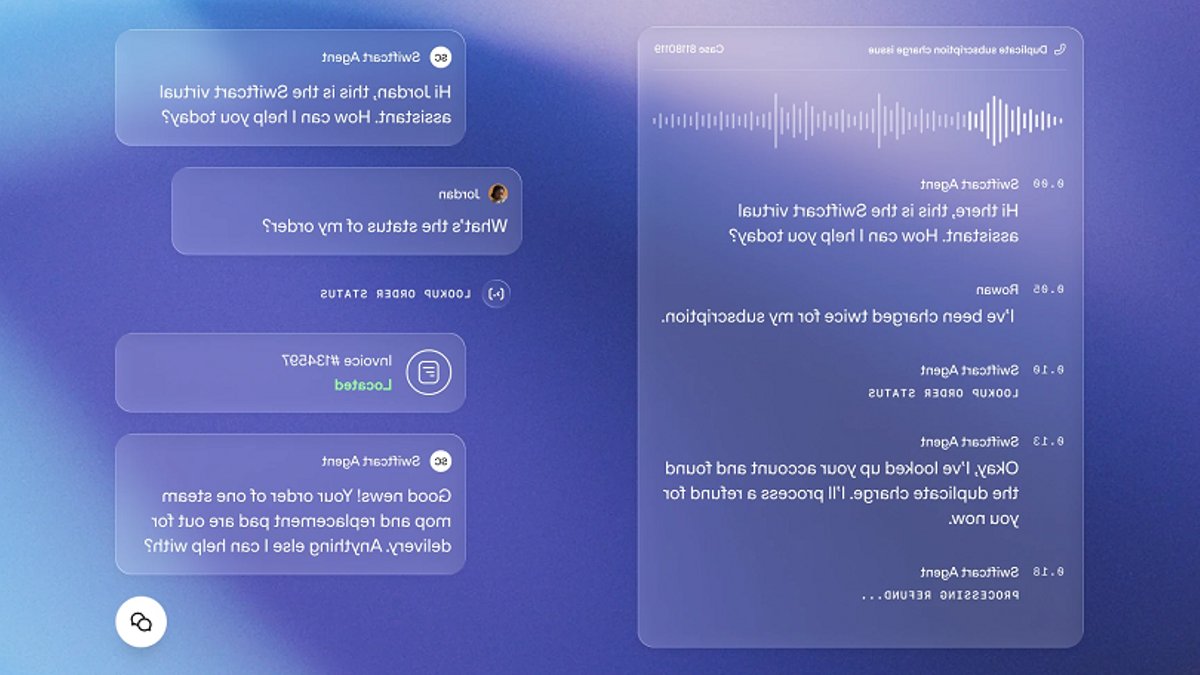
OpenAI Group PBC introduced a product called Presence that enterprises can use to build artificial intelligence agents. The company is using the software to power its call center, and according to OpenAI, Presence matched help desk representatives’ response quality within a few weeks of going live.
The platform currently processes about 75% of the ChatGPT developer’s inbound support requests. Presence is designed to power AI agents that focus on relatively narrow tasks.
How Presence Works
For example, a procurement team could build an AI agent that automates supplier onboarding. A sales team can use Presence to collect and organize lead data.
The platform enables companies to create guardrails that block risky AI actions. For example, a retailer could limit what product databases an agent uses to answer sales inquiries.
Guardrails and Simulation
Presence guardrails also regulate how an agent interacts with the systems that it has permission to access. Developers can use a built-in simulation tool to test their guardrails’ effectiveness.
Related: Technology IPO Battles Begin Years Before Public Launch
Presence creates edge cases, requests that AI agents are only likely to encounter rarely, and measures how well they respond. It also checks other details such as whether an agent uses the correct tools to process prompts.
Once an agent is in production, Presence uses OpenAI’s Codex programming assistant to monitor its output quality. The tool collects signals such as the frequency at which an agent routes complex requests to a human support representative.
Improvement Suggestions
It then uses the data to generate improvement suggestions. The AI agent telemetry that Presence collects is also useful for other tasks.
A software company could analyze its support agent’s telemetry to identify the most common technical issues that users encounter. Developers can use such information to make product enhancements.
Codex is powered by GPT-5.6, a series of large language models that OpenAI debuted last month. The most advanced algorithm in the lineup, Sol, set a record on a popular AI benchmark.
The benchmark comprises multistep knowledge work tasks like those Presence is designed to automate. On launch, the platform is accessible to a small number of enterprises via a so-called limited general availability program.
Related: Sovereign AI to dictate winners of AI race
OpenAI will provide extensive technical support to customers. Its engineers will help companies connect Presence-powered agents to their other systems, create guardrails and test their reliability.
Availability and Support
Presence is rolling out a few weeks after OpenAI made another addition to its enterprise tooling lineup. The company rolled out ChatGPT Work, an AI agent embedded in the ChatGPT app that is optimized for business tasks.
It can use data in applications such as Excel to create documents. According to OpenAI, ChatGPT Work is also capable of automating more complex tasks that take several hours to complete.
OpenAI’s Presence is available to a limited number of enterprises.
A message from John Furrier, co-founder of SiliconANGLE: Support our mission to keep content open and free by engaging with theCUBE community. Join theCUBE’s Alumni Trust Network, where technology leaders connect, share intelligence and create opportunities. 15M+ viewers of theCUBE videos, powering conversations across AI, cloud, cybersecurity and more 11.4k+ theCUBE alumni — Connect with more than 11,400 tech and business leaders shaping the future through a unique trusted-based network. Are you AWS customer? Support SiliconANGLE Financially by buying your AWS services from our Marketplace portal page and links. SiliconANGLE Media is a recognized leader in digital media innovation, uniting breakthrough technology, strategic insights and real-time audience engagement. As the parent company of SiliconANGLE, theCUBE Network, theCUBE Research, CUBE365, theCUBE AI and theCUBE SuperStudios — with flagship locations in Silicon Valley and the New York Stock Exchange — SiliconANGLE Media operates at the intersection of media, technology and AI. Founded by tech visionaries John Furrier and Dave V


