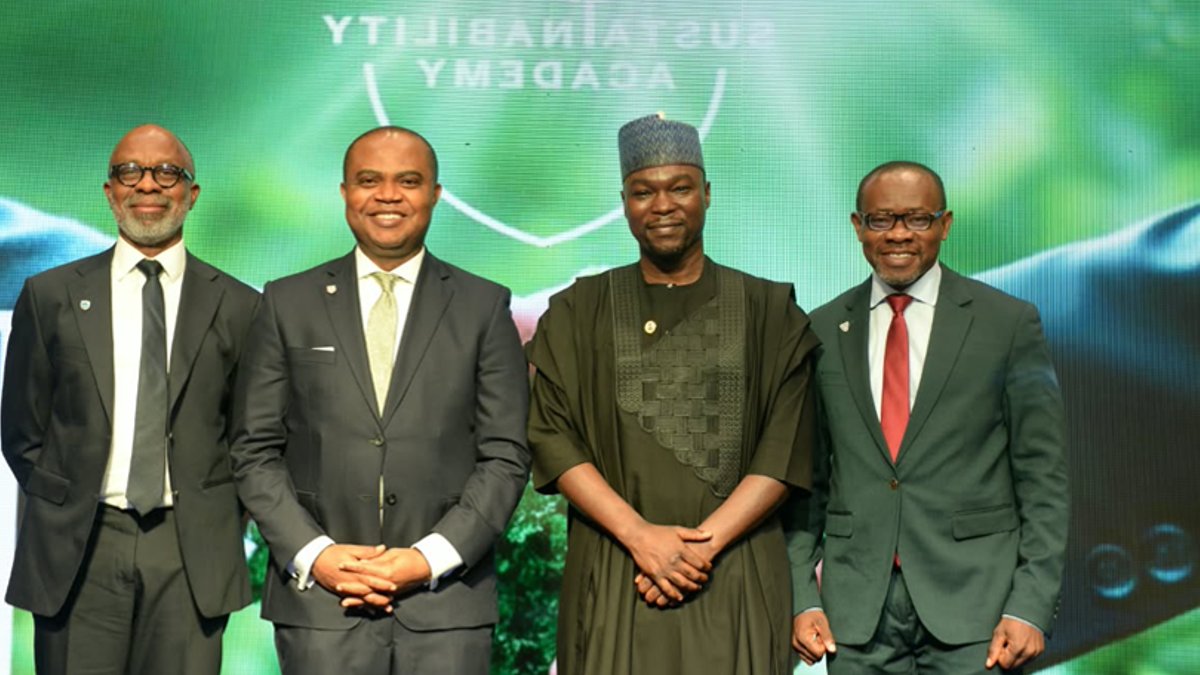
Stanbic IBTC Holdings concluded the third edition of its Sustainable Finance Summit, reinforcing its commitment to turning Nigeria’s sustainable finance discussions into actionable steps. The event, held under the theme “Financing a Just Transition: Mobilising Capital for People, Policy”, featured a hybrid format that gathered executives, regulators, investors, and academics. Their discussions centered on how capital allocation could support climate solutions while ensuring no community was overlooked.
The summit emphasized moving beyond theoretical discussions to practical implementation. Nwokocha, the chief executive of Stanbic IBTC Holdings, stated that sustainability was no longer abstract but required immediate action. “It is about how we allocate capital today; how we shape policy; how we bring others along on the journey; and how we build institutions capable of delivering prosperity for every Nigerian and for future generations,” he said.
A major development was the launch of the Standard Bank Sustainability Academy, a free educational program. The initiative seeks to equip individuals—including professionals and students—with skills in sustainable finance. Chuma, a senior executive at Stanbic IBTC, explained that the academy would provide free access to essential knowledge, supporting a workforce prepared to contribute to Nigeria’s sustainable development goals.
Academics and policymakers at the summit argued that Nigeria’s economic and climate objectives could advance together rather than compete. Professor Adi, a professor of economic and business intelligence at Lagos Business School, highlighted that sustainable finance could drive private investment, create green jobs, and strengthen local economies. The transition is not merely an exercise in managing risk. It is a commitment to millions of Nigerians through private investment in resilient infrastructure, clean energy access, and sustainable enterprises.
Mallam Ibrahim Shelleng, the Special Adviser to the President on Climate Finance, pointed to the Climate Change Act, the updated Nationally Determined Contribution, the Energy Transition Plan, the Electricity Act, the emerging sustainable finance taxonomy, and the country’s carbon-market framework as measures supporting an inclusive transition and increased long-term pathway for power, transport, and industry. “The objective is to pursue a transition that is ambitious, just and aligned with the Paris Agreement,” he said.
Titilayo Oshodi, Special Adviser to the Lagos State Governor on Climate Change and Circular Economy, reinforced the need for balanced development. “Nigeria’s just transition must simultaneously expand access to reliable energy, strengthen infrastructure, create jobs, and help businesses respond to climate-related risks,” she said. “Clean energy can expand access to reliable power, resilient infrastructure can protect economic activity, and a strong circular economy can turn waste into businesses, jobs, and productive resources.”
Participants acknowledged that Nigeria’s sustainable finance ecosystem needed stronger collaboration between public and private sectors. Existing policy frameworks would only succeed if capital was deployed effectively. The Standard Bank Sustainability Academy and similar programs aim to address skill gaps, ensuring investors and communities could engage meaningfully in the transition.


