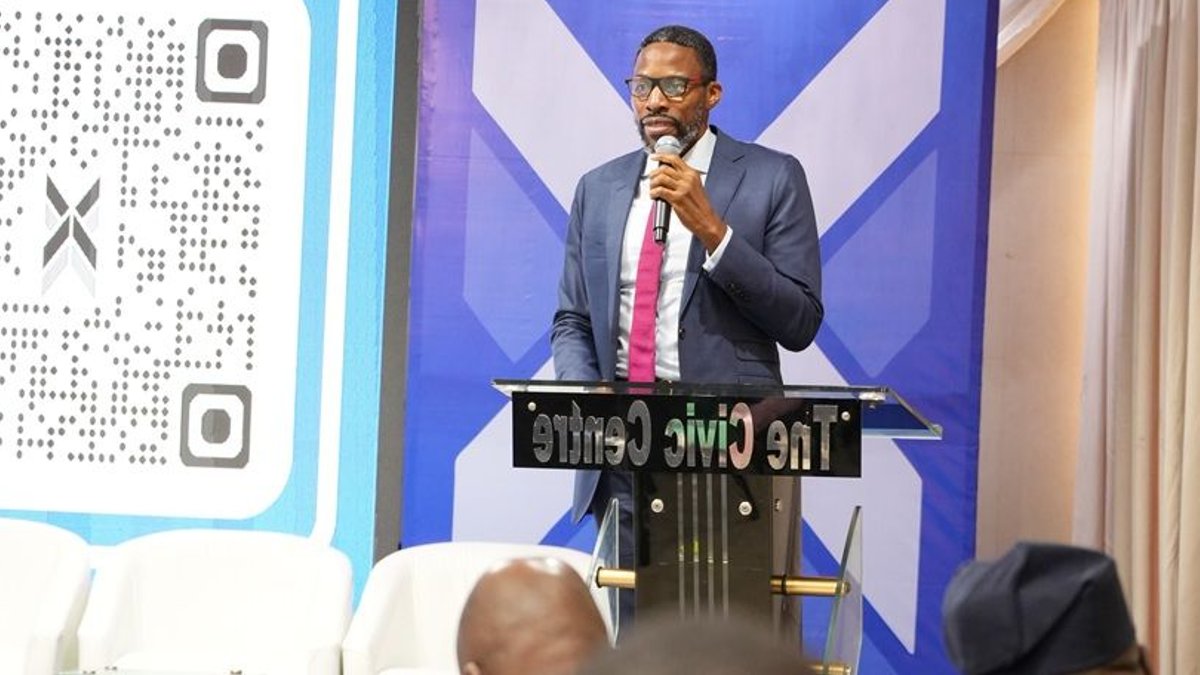
Artificial intelligence adoption is increasing, but many businesses find it difficult to convert their investments into tangible benefits, according to Ikenna Odike, CEO of OUTCESS. Odike spoke at the GrowthX event, organized by Techeconomy and TiLAwards, where he addressed the theme “Beyond the AI Hype: How Businesses Can Turn Technology into Measurable Growth.” He argued that pilots, chatbots, and technology demonstrations alone do not signify successful digital transformation.
He emphasized a widening gap between AI adoption and measurable business value. Data from McKinsey indicates that AI usage has increased from 78% to 88% among organizations. However, Odike questioned whether AI effectively enhances revenue, reduces costs, improves productivity, or enhances customer experience, stressing that the focus should be on tangible outcomes rather than mere adoption.
Moving beyond adoption to focus on measurable outcomes
Odike stressed that AI generates value only when integrated into existing workflows. He identified process redesign, data quality, workforce retraining, and change management as essential components for transforming AI initiatives into tangible results. He noted, “It is the process redesign that needs to happen for AI to actually work. What is the quality of the data you’re using to build your AI platforms? And it is workforce retraining.” Without these elements, organizations cannot expect significant returns from AI.
He advocated for businesses to assess AI based on specific metrics such as cost per resolution, process cycle time, conversion rates, and customer churn. Each AI-driven process should have a designated owner with associated performance indicators. Odike emphasized, “It’s not just saying that you’re improving efficiency abstractly. You must have a new business metric that AI is helping you to enable.”
Addressing workforce retraining and infrastructure limitations
He also pointed out Africa’s constrained data-center infrastructure as a hurdle for large-scale AI implementation. Africa accounts for only 0.5% to 5% of global data-center capacity, depending on the metric.
Odike remarked, “Smart deployment on constrained infrastructure and leveraging well-trained people, not from building anyone that computes, is key.”
To illustrate, Odike cited the example of customer service, where businesses handle approximately 21 million customer interactions annually across voice, chat, and interactive voice response channels. Traditionally, quality assurance teams manually review a fraction of these interactions, limiting their ability to analyze the full scope. He asked, “How many quality assurance people can actually go through 21 million conversations or interactions? That’s not possible.”
Odike concluded that businesses should approach AI by pinpointing problems, defining workflows, assigning accountability, and setting measurable goals. Success hinges on disciplined execution rather than mere experimentation.


