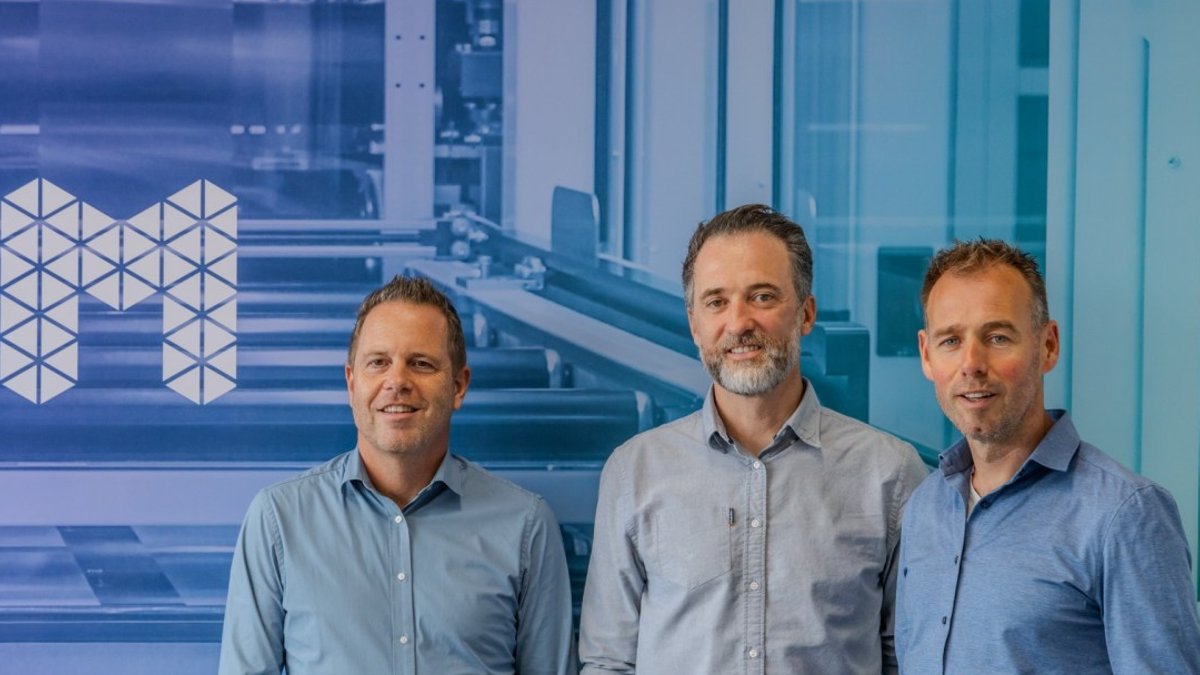
Dutch firm Morphotonics announced that it has secured a financing round of €40 million, a sum intended to broaden the reach of its nanoimprint lithography platform. The capital injection will be used to enlarge manufacturing capacity and to steer the business toward the emerging market of data-center optics. This latest fundraising is part of an extended round that began in 2024, raised in multiple installments, reflecting the company’s strategic growth plans.
The investment round was anchored by 3M Ventures, Innovation Industries, BOM, and Invest-NL. Additionally, the European Innovation Council and the European Investment Bank joined as participants, providing both strategic and financial backing. This diverse group of investors shows confidence in Morphotonics’ potential to transform optical manufacturing.
From smart glasses to data centers
Morphotonics applies nanoimprint lithography (NIL) to fabricate components for augmented-reality headsets and other optical products. The method works by pressing a patterned stamp into a photosensitive layer, transferring detailed designs in a single step. This process, developed over 12 years largely under the radar, has positioned the company as a key player in the optics industry.
This approach underpins the waveguide displays found in head-mounted devices such as the Meta Ray-Ban collaboration and the Magic Leap system. Waveguides consist of ultra-thin glass or polymer sheets that channel light directly into the wearer’s field of view, creating the illusion of floating images. As consumer interest in smart glasses grows, Morphotonics is scaling production to meet demand, with a focus on both consumer and industrial applications.
As consumer interest in smart-glass solutions climbs, the firm is accelerating its production lines. It is also preparing a next-generation machine aimed at the data-center sector, projected to output 6 million waveguides each year. This expansion aligns with market trends, as the research firm IDC noted in June that shipments of smart glasses with displays are expected to reach 12.2 million by 2030.
Read Also: Vocci launches ring for discreet meeting recordings
The financing has already allowed the organization to more than double its workforce to 60 employees, up from roughly 30 in September 2024, when CEO Hugo Da Silva joined. Management plans to settle at a headcount between 70 and 75 staff members and anticipates delivering the new equipment in early 2025. This growth reflects the company’s rapid scaling and ambition to lead in its sector.
A global manufacturing footprint
The company markets both the physical hardware and the associated licensing rights for its lithography process. At present, 90 percent of revenue derives from hardware sales, while a portfolio of 10-15 systems is already installed across multiple continents. This dual approach ensures customers receive both cutting-edge technology and full support.
Strategic goals include expanding the installed base to 50 deployments within the next 2-3 years. Production facilities are heavily concentrated in Asia, with dedicated teams operating out of China, Taiwan, South Korea, and a branch in the United States. CEO Hugo Da Silva emphasized the importance of a strong local presence in these regions to effectively serve global markets.
With the fresh infusion of capital, the firm is well positioned to meet rising demand for both immersive-display components and high-speed optical links for data centers. Executives expect a noticeable increase in global presence as new contracts are secured and additional manufacturing sites come online in the coming years. For inquiries, contact Ivan at [email protected] or via encrypted message at ivan.42 on Signal, or Dominic at [email protected] or via encrypted message at +1 646 831-7565 on Signal.


